The Hardest Part Wasn’t the Fire: What It Was Like Being One of the First Female Firefighters
My cousin called me shortly after she heard I was retiring from the fire department.
It was thoughtful of her, honestly.
We caught up on family news, traded photos back and forth, and made vague but optimistic plans for a future post-pandemic wine weekend that may or may not ever happen.
Then, just before hanging up, she said:
“I don’t know how you did it all those years. Firefighting must be really hard for a girl.”
She meant well.
But I laughed afterward because I had been hearing versions of that sentence for almost my entire career.
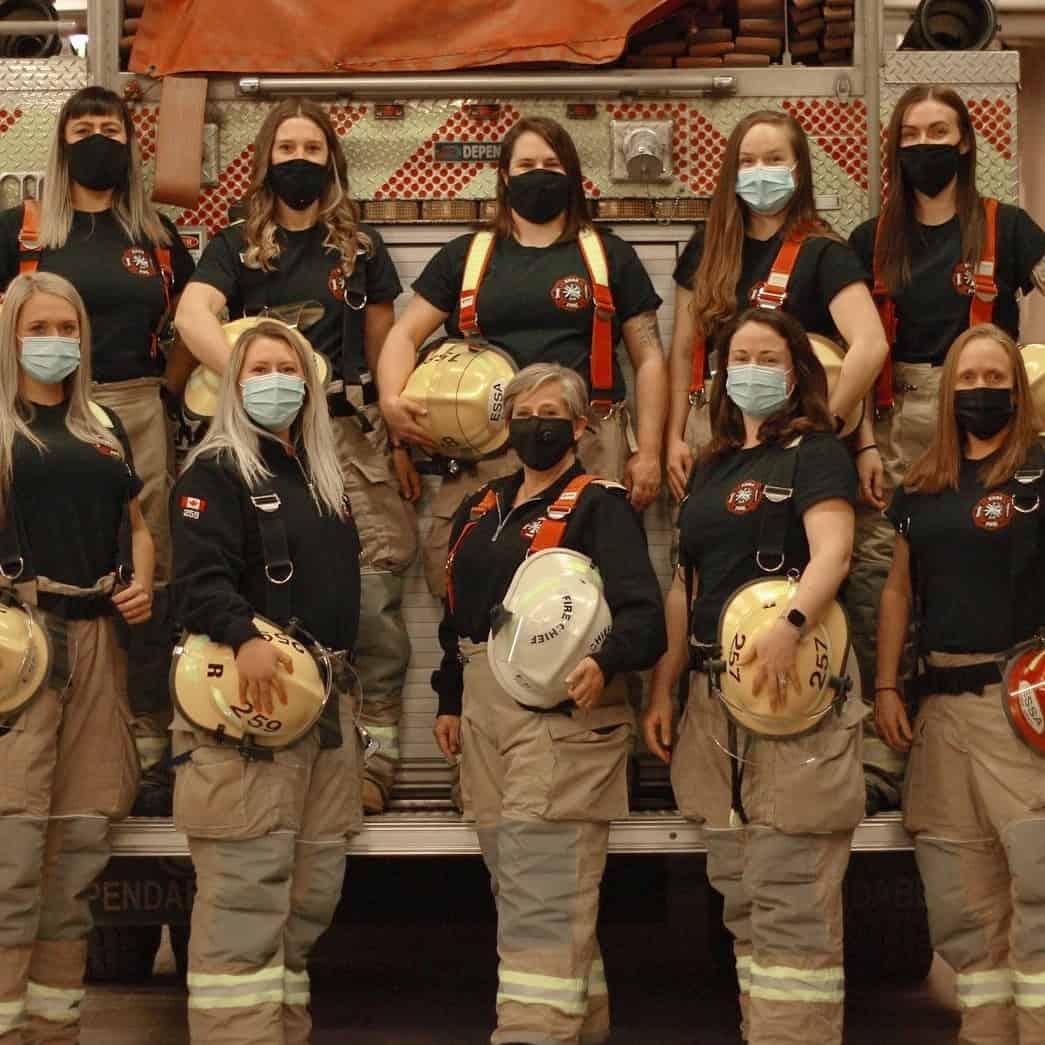
And strangely enough, it immediately brought to mind a photograph one of our firefighters, Darci Williams, had taken a few months earlier during Women’s History Month.
I still love that picture.
Not simply because it showed women firefighters.
But because there were ten of us standing there together.
When I entered the fire service in 1986, I barely knew ten female firefighters existed in the entire country.
That photograph quietly captured something important:
not just how far women had come in the fire service, but how much the experience of belonging had changed, too.
Because if I’m being honest, the hardest part of the job was never actually the fire.
Firefighting is difficult work for everyone.
It is physically exhausting.
Mentally demanding.
Dangerous.
Unpredictable.
You work in temperatures over 1,000 degrees while carrying your own air supply into environments most people are desperately trying to escape.
You walk into situations where someone else is having the worst day of their life and somehow expects you to make it better.
You carry the weight of knowing your family is at home, wondering whether you will come back safely.
And firefighters continue to face some of the highest occupational cancer risks in the world.
None of that has anything to do with being female.
The fire does not care.
Gravity does not care.
Exhaustion does not care.
The job is hard because the job is hard.
But early in my career, there was another layer to all of it:
👉 isolation.
When I started, many people genuinely believed women would not last in the fire service.
To be fair, some of them were polite about it.
Others were not.
More than once, I heard versions of:
“It’s nice that you joined, but this is probably too hard for a girl long term.”
Oddly enough, that attitude may have helped keep me there.
Because once people tell you repeatedly that you cannot do something, a certain stubbornness kicks in.
Honestly, if everyone had simply said:
“Cool. Glad to have you here.”
I might have quietly drifted into another career years earlier.
But they didn’t say that.
So I dug in.
And over time, something interesting happened.
The job became less about proving I belonged and more about simply doing the work well.
That shift matters.
Because eventually, competence speaks louder than novelty.
And thankfully, the fire service itself evolved too.
Not perfectly.
Not instantly.
But meaningfully.
The photograph Darci took represented something I never could have imagined when I first started: women no longer standing alone.
That matters more than people outside the profession probably realize.
Because isolation changes how people experience difficulty.
Hard things become much harder when you believe you are carrying them alone.
Belonging changes that.
So does mentorship.
So does culture.
So does seeing someone ahead of you who has already proved it could be done.
Looking back now, I realize the fire service shaped far more than my career.
It shaped:
- my confidence
- my resilience
- my leadership style
- my sense of responsibility
- and my understanding of how people grow through discomfort
It also taught me something I did not fully appreciate at the time:
identity becomes deeply attached to meaningful work.
Especially work that feels mission-driven.
For decades, I never really had to wonder whether what I did mattered.
The answer was obvious every time the pager went off.
Retirement changes in ways many people do not anticipate.
When you step away from a profession that once gave your life:
- urgency
- structure
- community
- and meaning
There is often a strange adjustment period afterward.
Not because retirement is bad.
But because purpose and identity rarely detach themselves cleanly.
And honestly?
I suspect that is true for far more people than just firefighters.
Teachers.
Nurses.
Police officers.
Military personnel.
Parents.
Executives.
Caregivers.
Anyone whose identity became tightly connected to being needed.
Which is why I now think retirement is far more psychological than most people expect.
It is not simply the end of work.
It is the transition into figuring out who you are once the role itself no longer answers the question for you.
Still, when I look back on my years in the fire service, the thing I feel most strongly is not bitterness.
It is gratitude.
Grateful that I stayed.
Grateful that the culture changed.
Grateful that younger women entering the fire service today are walking into a profession that looks very different from the one I entered decades ago.
And perhaps most of all:
gratitude that I got to witness the shift firsthand.
Because sometimes progress is easiest to see when you have lived long enough to remember what came before it.
Related Reading
Are You Reinventing Your Life After Retirement — Or For Retirement?
Are You Reinventing Your Life After Retirement — Or For Retirement?
Retirement Transition: The Science Behind Why It Feels Harder Than Expected

Cynthia Ross Tustin is the founder of I'm Thinking of Retiring, an online publication exploring the psychology, purpose, and everyday realities of life after work. A retired Fire Chief, former ICU and Emergency Room nurse, instructor, and policy writer, she combines lived experience, research, and a lifelong curiosity about human behaviour to write thoughtful essays on retirement, identity, purpose, friendship, and the ordinary moments that quietly reveal something larger. Through her Retirement Field Notes and Ordinary Tuesday series, she encourages readers to approach this next chapter with curiosity rather than certainty.