Why Old-School Skills Matter More After Retirement
In an Artificial World, Old-School Hobbies Feel Surprisingly Human
In all my previous posts, I’ve told you that I’m not writing all these articles like the “others.” I’m not here to tell you all the typical stuff people say about retiring, or preparing to retire…get your finances in order, and find a hobby.
Until today, that is. Although in my defense, this post is more psychological rebuilding through participation, capability, and tangible engagement, than it is – try knitting.
Knitting, by the way, was what Google suggested that I do after I retired.
Because eventually, most of us run into a question we didn’t fully expect:
👉 What do I actually do with myself now?
Not every day feels exciting.
Not every retiree wants to spend endless hours:
- scrolling
- streaming
- shopping
- or sitting around waiting for the next vacation
And honestly?
I think that is healthier than we give people credit for.
Because human beings were never really designed for passive consumption all day long.
We are wired for:
- participation
- movement
- curiosity
- creativity
- problem-solving
- and contribution
Which may be one reason old-school hobbies are quietly making a comeback.
Not because retirees suddenly want to live like it is 1952 again.
But because many traditional skills still provide something modern life increasingly struggles to offer:
👉 tangible satisfaction.
You do not just consume.
You build.
Repair.
Grow.
Cook.
Preserve.
Create.
And psychologically, that changes how life feels.
These Hobbies Are About More Than Staying Busy
I discovered this mattered far more after retirement than I ever thought it would.
Not necessarily the hobbies themselves.
The feeling underneath them.
The satisfaction of making progress toward something tangible.
The rhythm of working with your hands.
The visible evidence that your effort created something real.
Careers quietly provide people with built-in feedback loops:
- problems get solved
- projects get completed
- people rely on you
- progress becomes measurable
Then retirement arrives, and many people suddenly find themselves living in days where very little feels tangible anymore.
And honestly?
I increasingly suspect that is part of why endless passive leisure eventually starts feeling unsatisfying for so many people.
Human beings seem to need more participation, progress, and visible engagement than the modern retirement culture often acknowledges or offers.
That may also explain why so many people returned to:
- gardening
- baking
- sewing
- woodworking
- canning
- and home projects during COVID
Partly out of practicality.
Partly out of nostalgia.
But I suspect something deeper was also happening.
People were craving:
- tangibility
- self-reliance
- creativity
- competence
- and direct interaction with the real world
Especially during a period when life suddenly felt uncertain, abstract, and strangely disconnected. That was COVID to a tee. And that’s what retirement can feel like for some people, too.
Old-School Hobbies Feel Different Because They Are Different
Many modern hobbies are passive.
They distract.
They entertain.
They help pass the time.
There is nothing inherently wrong with that.
But passive entertainment rarely creates:
- momentum
- mastery
- confidence
- capability
- or a deeper sense of engagement with life
Old-school hobbies tend to work differently.
They involve:
- attention
- patience
- trial and error
- problem-solving
- and visible progress
They also reconnect people with something modern life increasingly pushes aside:
👉 competence.
The feeling that:
- You can still fix things
- build things
- grow things
- repair things
- and create things yourself
That matters psychologically.
Probably more than we would like to admit.
Sometimes Hobbies Are Really About Memory
About a year into retirement, I pulled out the recipe cards from both of my grandmothers — and my Auntie Mary.
Auntie Mary, for the record, made the world’s best garlic dill pickles.
Partly because I suddenly had the time.
Partly because I missed those people.
And yes, partly because I realized I had not eaten a decent dill pickle in almost thirty years.
Around the same time, I dug out my old embroidery threads and beads, so I could start jazzing up my grandchildren’s clothes and making them a little funkier and more one-of-a-kind.
I had been seeing children’s clothes in stores that were machine-made to look vintage and handcrafted.
Honestly, the idea of mass-produced “one-of-a-kind” embellishments struck me as slightly ridiculous.
And maybe that is part of what old-school hobbies are quietly pushing back against.
In a world increasingly filled with:
- automation
- algorithms
- AI-generated content
- disposable products
- and digitally manufactured versions of authenticity
There is something deeply satisfying about creating something genuinely imperfect, personal, and real with your own hands.
Not because it is more efficient.
Usually, it is not.
But because human beings still seem to crave authenticity far more than modern life often allows.
These Skills Carry More Than Practical Value
Old-school hobbies are not simply nostalgic.
They reconnect people to:
- memory
- capability
- self-reliance
- participation
- family
- practical wisdom
- and intergenerational knowledge
Many of these skills were once passed:
- kitchen to kitchen
- garage to garage
- garden to garden
- hand-to-hand
Long before everything became:
- outsourced
- disposable
- automated
- or screen-based
And maybe part of retirement is rediscovering some of what busy working life pushed aside.
Not because we want to reject modern life entirely.
But because something inside us still recognizes the value of knowing how to:
- grow food
- repair things
- sew a button
- preserve recipes
- build something useful
- or create something nobody else in the world owns
There is a quiet dignity in that.
Gardening, Woodworking, Cooking, Repair — Why They Matter
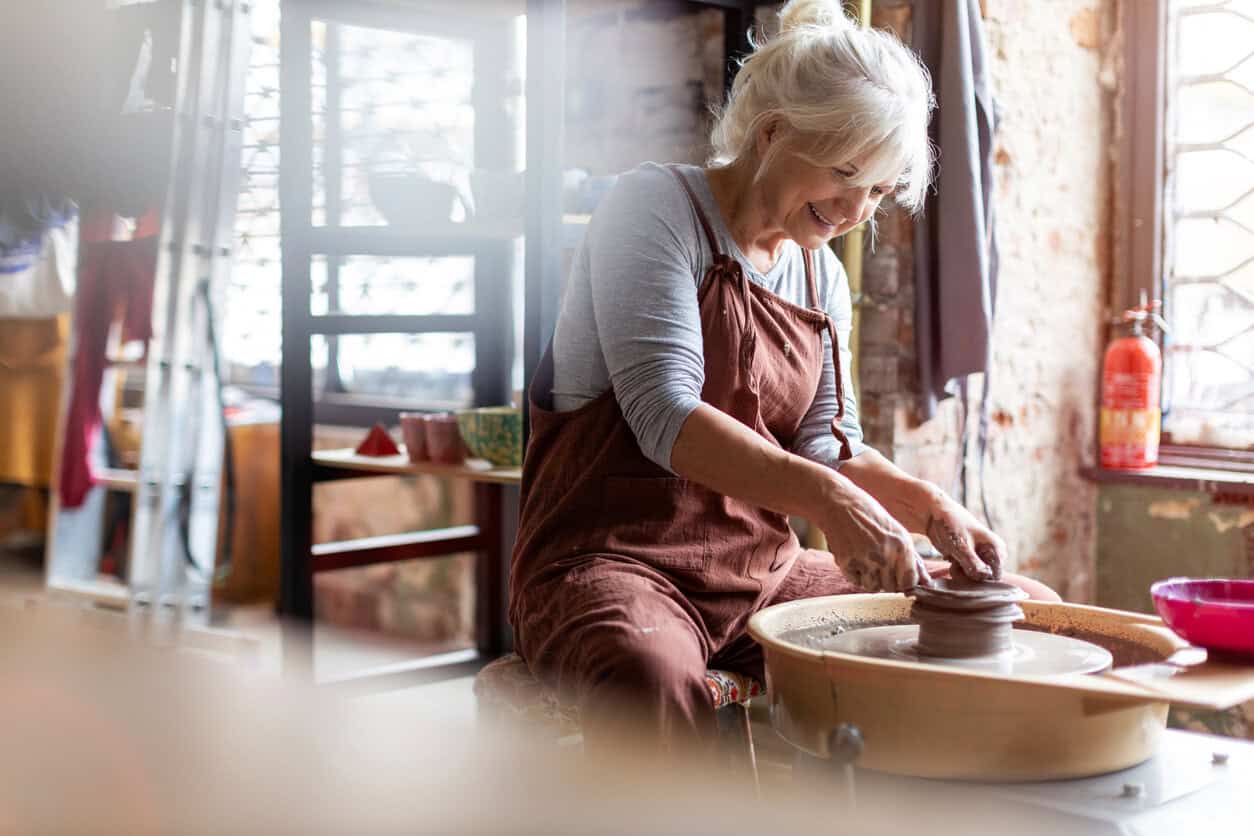
Gardening teaches patience.
Woodworking teaches attention.
Cooking from scratch reconnects people to creativity and sensory experience.
Repair work restores a sense of competence and problem-solving.
And all of them create something retirement often needs more of:
👉 meaningful participation.
Not hustle.
Not productivity obsession.
Participation.
Because one of the biggest risks after retirement is not boredom.
It is passive disengagement.
Slowly becoming more of a spectator than a participant in your own life.
Old-school hobbies gently push against that.
Final Thought About Old School Skills After Retirement
I do not think the growing interest in old-school hobbies is really about nostalgia.
At least not entirely.
I think many people are quietly searching for:
- authenticity
- capability
- participation
- creativity
- and tangible forms of meaning in an increasingly artificial world
And perhaps retirees feel that especially strongly because retirement finally creates enough space to notice what was missing all along.
Not just rest.
But engagement.
Not just freedom from work.
But connection:
- to people
- to memory
- to capability
- and to the deeply human satisfaction of making something real.
Not because you absolutely have to.
But because you still can.
Related Reading
Reflective Writing and Retirement: Why Writing Things Down Helps
Movement That Keeps You in the Game: The Best Low-Impact Activities for Adults Over 55
Are You Reinventing Your Life After Retirement — Or For Retirement?
E-Biking for Active Retirees: Freedom, Fitness, and Confidence on Two Wheels
How To Build A Meaningful Life
🔗 References
This article is informed by research in psychology, aging, and behavior change, including:
Mihaly Csikszentmihalyi — Flow: The Psychology of Optimal Experience
Nakamura & Csikszentmihalyi — The Concept of Flow
Martin Seligman — Flourish: A Visionary New Understanding of Happiness and Well-being
Gardening intervention study (NIH/PubMed Central)
Productive activities and successful aging (Journal of Gerontology)

Cynthia Ross Tustin is the founder of I'm Thinking of Retiring, an online publication exploring the psychology, purpose, and everyday realities of life after work. A retired Fire Chief, former ICU and Emergency Room nurse, instructor, and policy writer, she combines lived experience, research, and a lifelong curiosity about human behaviour to write thoughtful essays on retirement, identity, purpose, friendship, and the ordinary moments that quietly reveal something larger. Through her Retirement Field Notes and Ordinary Tuesday series, she encourages readers to approach this next chapter with curiosity rather than certainty.