Are You Reinventing Your Life After Retirement — Or For Retirement?
Most people prepare financially for retirement.
Far fewer prepare psychologically.
We plan for:
- pensions
- investments
- insurance
- downsizing
- taxes
- and perhaps a hobby or two, especially if they’re expensive hobbies
But retirement is not simply a financial transition with recreational side effects.
Retirement is more of a major identity transition that happens to involve money.
And honestly?
I think that disconnect is one of the reasons retirement catches so many people off guard.
To me, it looks like society largely treats retirement as though there is only one thing left to do after work:
slowly disappear into leisure until the end of life arrives.
That may sound harsh.
But culturally, we still talk about retirement primarily through the lens of:
- finances
- freedom
- golf
- hobbies
- travel
- and finally “taking it easy.”
As though the psychological side somehow takes care of itself.
Often, it does not.
Retirement Is a Major Life Transition — Whether We Admit It or Not
We celebrate and ritualize almost every other major life transition.
Graduation.
Marriage.
Divorce.
Children.
Promotions.
Funerals.
For the most part, we acknowledge those moments because we understand something important. People must rebuild, readjust, and reinvent themselves when life changes.
But retirement?
Well, we rarely talk about that as a life transition at all.
You work for forty years.
Someone hands you a watch.
People ask about your golf game.
And somehow you are supposed to quietly figure out the psychological side on your own.
Indeed, that is a truly remarkable cultural blind spot! After all, retirement often involves major changes to identity, structure, relationships, and purpose.
This is because retirement often involves:
- identity disruption
- loss of structure
- social changes
- routine collapse
- reduced momentum
- and major shifts in how people experience themselves
Yet culturally, we often reduce it to finances and getting a hobby.
My Grandfathers Taught Me Two Different Versions of Retirement
As a child, I unknowingly grew up with two completely different models of retirement.
Firstly, my mother’s father — Papaw — retired shortly after I was born.
In my memory, he was the quintessential little old man:
- white hair, what was left of it
- sparkling blue eyes
- slightly wrinkled
- sitting quietly in a rocker on his porch in Kentucky
He moved between:
- the kitchen table
- his recliner
- and the front porch
But nowhere else.
When I asked him to play, he would smile, pull me onto his lap, tell me he was retired, and we would both drift off to sleep in the sway of the rocking chair.
In my six-year-old brain, retirement became associated with:
- stillness
- withdrawal
- old age
- and quietly waiting to die
Papaw passed away at 72.
Then there was my father’s dad — Pappy.
Pappy was ten years younger and was about to retire when Papaw died.
He was active.
Busy.
Fit.
Traveling.
Golfing.
Planning.
When I heard Pappy was retiring, I burst into tears.
From all my vast childhood experience, “retiring” meant someone was about to suddenly become old and die.
Panic set in.
Pappy laughed and said:
“I’m not dying. But I am going to Florida to play golf and go marlin fishing.”
And he did.
He and my grandmother remained active and engaged for decades.
They lived independently until they were 100 and 97 years old.
We celebrated their 80th wedding anniversary.
They received cards from both the Queen and the Prime Minister.
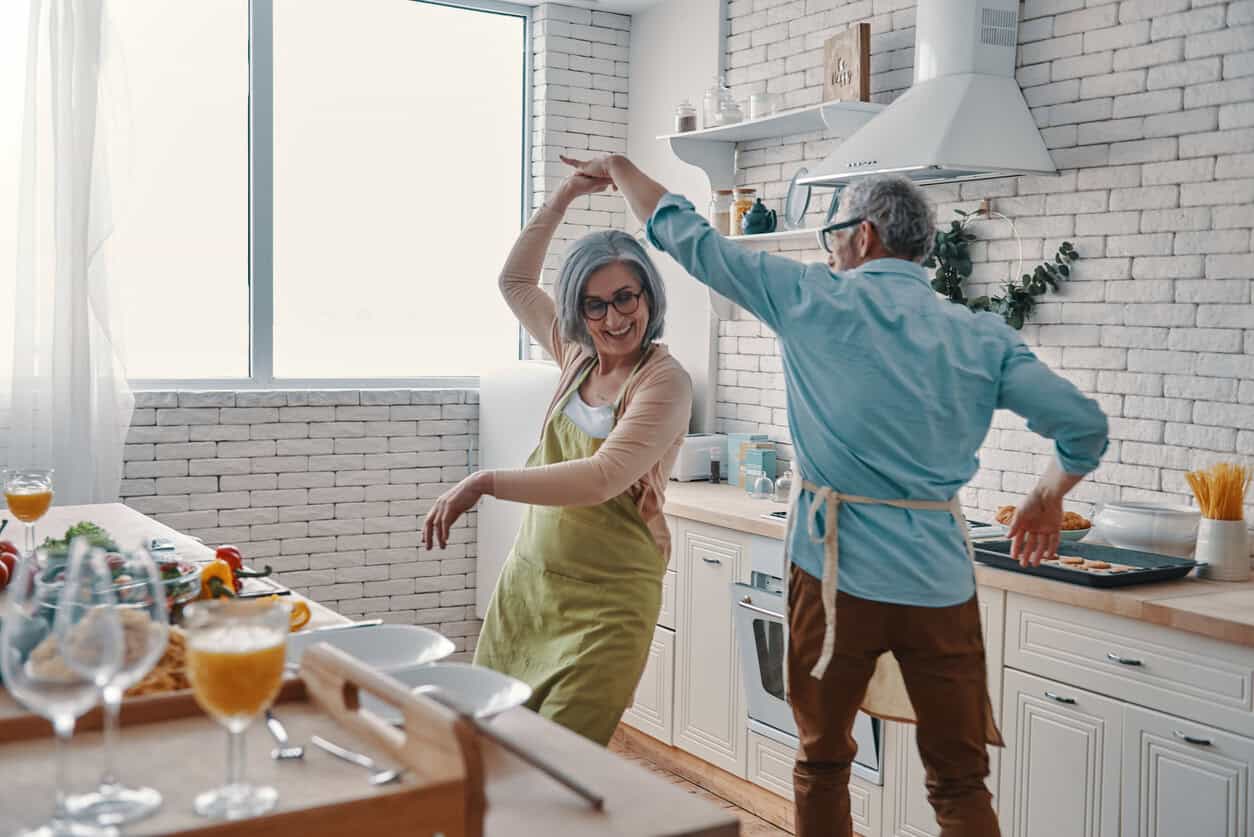
And I still remember watching them dance together around the room, long after most people would have stopped dancing at all.
One grandfather became my cautionary tale.
The other became my lifelong inspiration.
Participation is the new skill that retirement demands.
Years later, looking back now, I realize my two grandfathers represented two completely different versions of retirement.
One withdrew from participation.
The other reinvented it.
And honestly?
I think most people recognize both possibilities somewhere inside themselves.
That’s because, for many people, retirement is not simply about:
- stopping work
- gaining free time
- or filling the calendar
It’s the transition to a new structure, one where work has disappeared.
For decades, careers have provided:
- rhythm
- momentum
- identity
- routine
- social interaction
- feedback
- and purpose
Retirement removes much of that almost overnight.
And without realizing it, many people slowly drift toward withdrawal.
Not because they are lazy.
Not because they lack gratitude.
For me personally, it was more like losing my centre of gravity, or my internal compass. I left the fire hall on my last day with greeting cards with well wishes and nice sentiments. I probably would have found it super helpful if one had said: “Buckle up, it might get weird for a while.”
As a society, we rarely acknowledge retirement as a real psychological transition to a new stage of life…adult 2.0.
Beginner Energy
One of the strange things about adulthood 2.0 is the realization that many of us have stopped starting over. When was the last time you were a beginner?
Over time, careers reward:
- expertise
- efficiency
- predictability
- competence
- and specialization
We become very good at functioning inside familiar identities and routines. We honed our work competencies; we rarely added new ones from scratch.
Retirement disrupts that structure.
Suddenly, many people find themselves asking questions they have not asked in decades:
- What do I actually enjoy now?
- Who am I outside of work?
- What interests me?
- What kind of life do I want to build next?
And honestly?
That can feel surprisingly uncomfortable.
Because reinvention often requires something adulthood slowly trains out of us, beginner energy.
Beginner energy is:
- curiosity
- openness
- experimentation
- participation
- trying things before feeling fully confident
It is:
- taking the dance class
- joining the walking group
- learning pickleball
- snorkeling for the first time
- traveling differently
- volunteering
- taking up photography
- learning a language
- saying yes more often
More importantly:
Beginner energy often creates a connection.
Children make friends through:
- shared curiosity
- repeated participation
- exploration
- and play
Retirees often rediscover friendship in very similar ways.
Not through forced networking.
But through:
- movement
- curiosity
- travel
- classes
- volunteering
- hobbies
- and shared experiences
Making friends after retirement often looks less like networking and more like returning to curiosity.
Reinvention Happens Either Way
One of the biggest misconceptions about retirement is that reinvention is optional.
It isn’t.
Retirement changes:
- identity
- routine
- momentum
- relationships
- structure
- and how people experience themselves
The only real question is:
👉 Will reinvention happen consciously or unconsciously?
Some people slowly narrow.
Others gradually expand.
And often, the difference begins with participation.
Movement.
Curiosity.
Travel.
Community.
Purpose.
Contribution.
Exploration.
Not because these things magically prevent aging.
But because engagement itself appears to preserve something essential in people.
The goal is not simply to live longer.
The goal is to remain connected to life while you are living it.
Retirement Needs New Rites of Passage
Perhaps the biggest problem is this: Modern retirement has very few meaningful rites of passage.
There are no roadmaps.
Almost zero emotional preparation.
Or cultural framework for what happens between finishing work and dying.
So maybe we need to create new ones ourselves; or maybe, at a personal level, you just reinvent retirement.
Maybe retirement deserves:
- reflection
- adjustment
- rebuilding
- reinvention
- celebration
- and conscious transition
just like every other major life stage.
Because retirement is not the end of usefulness.
It is not the end of growth.
And it certainly does not need to become a withdrawal from life itself.
Final Thoughts
The older I get, the more I realize my two grandfathers gave me something extraordinarily valuable:
👉 two entirely different visions of aging.
One version became smaller.
The other remained engaged with life almost until the very end.
That distinction shaped my worldview long before I understood retirement philosophically.
And honestly?
It still does.
Because I no longer believe the goal of retirement is simply relaxation.
I think the goal is continued participation.
Freedom from exhaustion.
Or possibly the elimination of hustle.
And definitely pretending we are still thirty.
But also:
- movement
- curiosity
- connection
- contribution
- and staying engaged with the world around us
for as long as we possibly can.
Because retirement is not just about leaving work.
It is about deciding what happens next.
Related Reading
Retirement Transition: The Science Behind Why It Feels Harder Than Expected
Retirement May Be the Modern Midlife Crisis — How to Rebuild Purpose and Meaning After Work
How to Make Friends: The Forgotten Science of Adult Friendship
Identity After Retirement – Was the Elephant Actually Wearing Pyjamas?
🔗 References
This article is informed by research in retirement transition, behavior change, identity, healthy aging, and social connection, including:
- Holt-Lunstad, J., Smith, T. B., & Layton, J. B. (2010). Social relationships and mortality risk: A meta-analytic review.
https://journals.plos.org/plosmedicine/article?id=10.1371/journal.pmed.1000316 - Keyes, C. L. M. (2002). The mental health continuum: From languishing to flourishing in life.
https://pubmed.ncbi.nlm.nih.gov/12090492/ - Ebaugh, H. R. F. (1988). Becoming an Ex: The Process of Role Exit.
- Wood, W., & Neal, D. T. (2007). A new look at habits and the habit-goal interface.
https://pubmed.ncbi.nlm.nih.gov/17937613/ - Hill, P. L., & Turiano, N. A. (2014). Purpose in life as a predictor of mortality across adulthood.
https://www.ncbi.nlm.nih.gov/pmc/articles/PMC2894461/

Cynthia Ross Tustin is the founder of I'm Thinking of Retiring, an online publication exploring the psychology, purpose, and everyday realities of life after work. A retired Fire Chief, former ICU and Emergency Room nurse, instructor, and policy writer, she combines lived experience, research, and a lifelong curiosity about human behaviour to write thoughtful essays on retirement, identity, purpose, friendship, and the ordinary moments that quietly reveal something larger. Through her Retirement Field Notes and Ordinary Tuesday series, she encourages readers to approach this next chapter with curiosity rather than certainty.