What Costa Rican Estuaries Can Teach Us About Health and Wellness?
One of the more interesting things I’ve begun noticing during our winters in Nosara is that two very different groups of people keep crossing paths. How can two groups with completely different ideas arrive separately for the same thing – Costa Rica health and wellness?
One group carries MRI reports, medication lists, specialist referrals, and appointments with orthopedic surgeons, dentists, physiotherapists, or imaging clinics.
The other arrives carrying yoga mats, meditation cushions, journals, supplements, and reservations at wellness retreats.
At first glance, they don’t appear to have much in common.
In fact, if I’m being honest, there is often a quiet skepticism between them.
The medical crowd tends to regard the wellness crowd as a little too “hippie-dippy.” Crystals, energy healing, ozone treatments, breathwork, and cold plunges can feel like a long way from evidence-based medicine.
The wellness crowd, meanwhile, often views conventional medicine as overly pharmaceutical, overly reactive, and too focused on treating disease rather than cultivating health.
It’s not exactly the Hatfields and McCoys.
Nobody’s shooting at one another.
But the distinction is surprisingly clear.
They speak different languages.
One talks about diagnostics, outcomes, and recovery.
The other talks about inflammation, nervous systems, mindfulness, and healing.
But in my head, they both seem to be talking about lifestyle and medicine. Lifestyle medicine? Who knows?
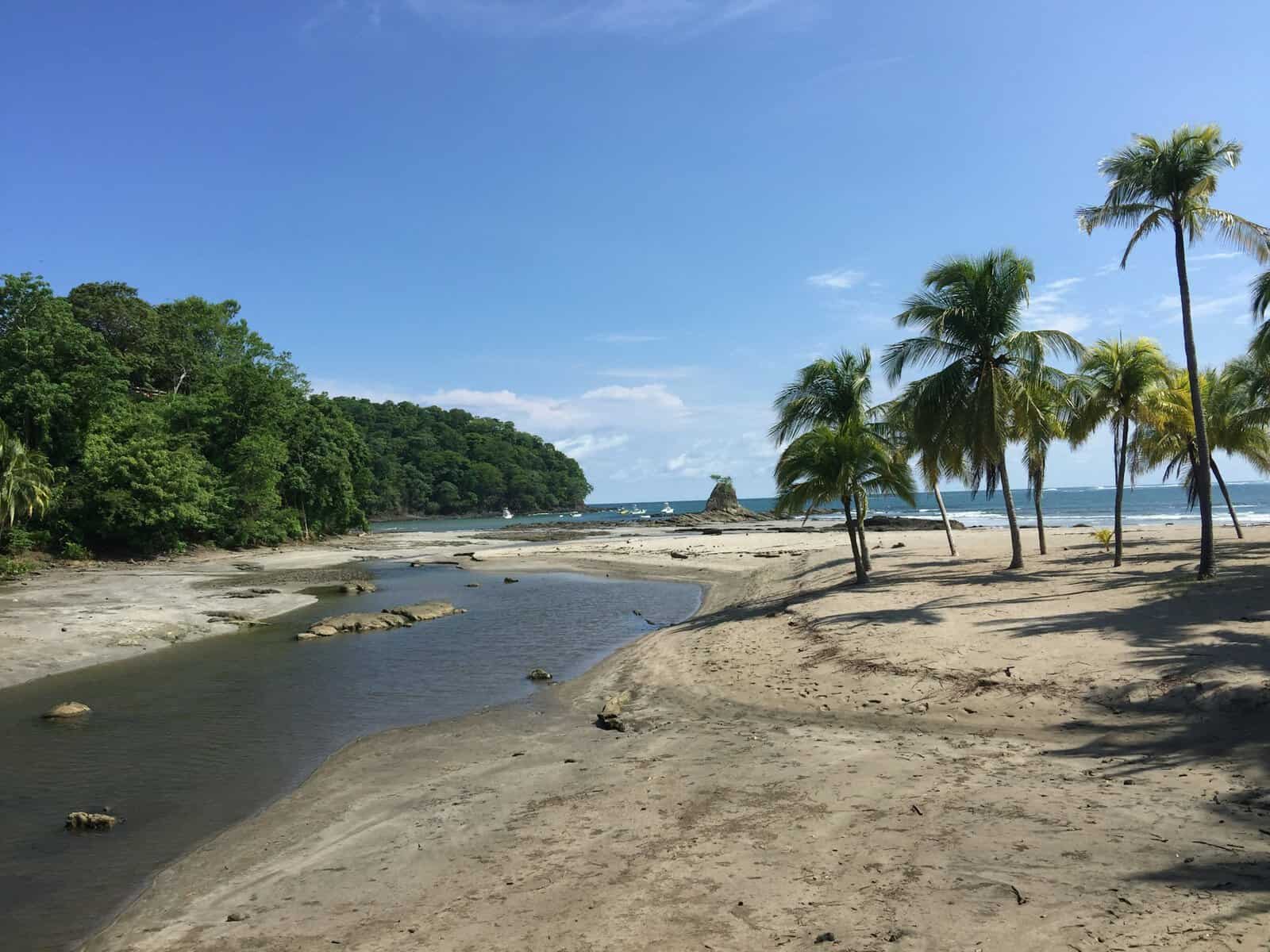
Another thing that I get to observe while in Costa Rica is estuaries. I live within minutes of several small ones. Estuaries are fascinating places, for just the birds alone. But they’re so much more.
Costa Rica has seventeen recognized estuaries. That’s high by global standards.
They’re transition zones where freshwater meets saltwater.
Ecologists call places like this ecotones.
They are among the most biologically productive places on Earth because different ecosystems overlap rather than compete.
Sitting in Costa Rica, I’ve started wondering whether something similar is happening with people.
One of the more interesting things I’ve started noticing is that these two “health” groups are just how medically diverse their beliefs are, and yet down here, they keep drifting toward one another. They converge constantly.
The retired accountant who flew down for a knee replacement is taking gentle yoga classes six weeks later. The woman who came for a wellness retreat quietly admits that her shoulder probably does need imaging after all.
The physiotherapist recommends breathwork. The yoga instructor recommends strength training.
Curiously, they often seem to find common ground in the same Blue Zone yoga shalas.
Not because they’ve abandoned their beliefs.
So it makes me wonder whether Costa Rica has become a kind of healthcare ecotone. And that would be a very productive environment for both views to mingle. There is a quiet confluence of ideas and philosophies being exchanged. Maybe certain environments make different or divergent views possible. Perhaps it really is as simple as “Pura vida, baby?”
For years, I’ve thought about traveling for dental care or a specific procedure as “medical tourism.”
Researchers largely do the same.
Most of the literature focuses on practical questions.
How much does it cost?
How long are the wait times?
Which clinics are accredited?
Are the physicians well trained?
Those are important questions.
And they’re well researched.
Meanwhile, another very separate body of research has been growing around wellness tourism.
Those researchers ask very different questions.
They study autonomy. Identity. Active aging. Psychological well-being.
Interestingly, those two conversations rarely intersect.
Researchers continue to treat medical tourism and wellness tourism as largely separate fields, focusing on different motivations and outcomes. Medical tourism research tends to emphasize cost, quality, and access, while wellness tourism research explores participation, autonomy, and identity.
Yet, from the perspective of someone spending winters in Costa Rica, those distinctions sometimes appear less clear on the ground, because both involve people traveling in pursuit of better lives. I routinely see people with a new knee implant taking gentle yoga classes. And I myself routinely get my dental work done on the way home from a beach walk…sandy toes and all.
Because I don’t think either group is actually shopping for what they say they’re shopping for. Both groups ultimately seem to arrive here for the same reasons via opposite directions, much like where the river meets the sea.
The retired couple who came for dental implants certainly appreciate paying less, and the man waiting for orthopedic surgery appreciates bypassing a two-year wait list.
Those things matter. But no one gets a new hip so they can sit more comfortably watching Jeopardy.
The hip isn’t the goal. The better quality of life that comes after it is.
And those who come seeking wellness through more organic, spiritual, and holistic approaches seem to be comfortable taking full advantage of the country’s amazing modern dentistry.
People don’t usually cross a border because they’re passionate about crowns and implants.
They cross it because they want to eat comfortably, smile and laugh without embarrassment, and join conversations without thinking about their teeth. This one was totally me!
The dentistry restores far more than chewing. It too is about an improvement to the quality of your life
So let’s stick with chewing for a minute, figuratively, not literally. Because when you sit down and chew on what “quality of life” is in practical terms, I think it means “Participation.”
Participation.
Perhaps that’s the bridge connecting these two seemingly different worlds.
The medical crowd wants to preserve it.
The wellness crowd wants to optimize it.
Both are ultimately trying to remain engaged with life.
They’re simply approaching the problem from different directions. And Costa Rica is the natural estuary, with enough medicinal diversity, making that overlap unusually visible.
And the fact that you can recover somewhere warm, walk more, stretch on the beach, and eat fresh food every day is simply a bonus.
As a former ICU and Emergency nurse, I have no interest in romanticizing either side.
Evidence matters.
Accreditation matters.
Qualified practitioners matter.
Not every treatment deserves our trust simply because it’s natural.
And not every prescription should be dismissed simply because it comes from conventional medicine.
Retirement has made me less interested in defending tribes and more interested in observing where they unexpectedly meet.
Yet, from the perspective of someone spending winters in Costa Rica, those distinctions sometimes appear less clear on the ground, because both involve people traveling in pursuit of better lives. I routinely see people with a new knee implant taking gentle yoga classes. And I myself routinely get my dental work done on the way home from a beach walk…sandy toes and all.
Author’s Note:
This essay is an observation based on spending several months each year in Costa Rica and supported by research on medical tourism, wellness tourism, and lifestyle medicine. Where I draw connections between these fields, those observations are my own.
Related Reading
If you enjoy following ordinary observations that turn into bigger questions, you might also like:
- Why the First Trip After Retirement Carries So Much Weight
- Can You Miss Work, But Not Miss Working?
- Best Beach Towns on Costa Rica’s Pacific Coast
- Costa Rica in August: Why Green Season Might Be the Best Time to Visit
Research Note
The observations in this article are informed by ongoing reading and research in psychology, sociology, adult development, aging, friendship, purpose, identity, and life transitions. While these essays are observational rather than academic, many of the underlying ideas are grounded in established research.
- Health Hub Costa Rica
- American College of Lifestyle Medicine
- Global Wellness Economy Monitor
- Global Wellness Institute. Wellness Tourism Initiative
- What is an Estuary?
- Connell, J. (2013). Contemporary Medical Tourism: Conceptualisation, Culture and Commodification.
- Mueller, H., & Kaufmann, E. L. (2001). Wellness Tourism: Market Analysis of a Special Health Tourism Segment.
- Blue Zones

Cynthia Ross Tustin is the founder of I'm Thinking of Retiring, an online publication exploring the psychology, purpose, and everyday realities of life after work. A retired Fire Chief, former ICU and Emergency Room nurse, instructor, and policy writer, she combines lived experience, research, and a lifelong curiosity about human behaviour to write thoughtful essays on retirement, identity, purpose, friendship, and the ordinary moments that quietly reveal something larger. Through her Retirement Field Notes and Ordinary Tuesday series, she encourages readers to approach this next chapter with curiosity rather than certainty.