Retirement and Social Connection: The Danger of “Bowling Alone”
My Papaw retired into his recliner with a television remote control.
And his “retirement lifestyle” choices have always been a cautionary tale for me, even in childhood.
The consequences of post-retirement lifestyle choices get talked about even less frequently than the post-retirement mental “friction” it can sometimes cause. My guess is that’s because society assumes that they’re done with us. And that we’re just going to “leisure ourselves” off into the sunset with our sensible shoes and our indexed pensions (if we’re lucky enough to have one)
But like that “mental friction,” those “consequences” rarely announce themselves dramatically. There’s usually relief in the beginning. Slower mornings. Fewer obligations. A break from the endless structure and responsibility of working life.
But gradually, by choice or by circumstance, our world became smaller. His did. Mine did. Yours?
Routines narrow.
Movement slowed.
The conversations became fewer.
And eventually, much of life can easily start to revolve around social media or the television. Papaw didn’t know any better. You and I do. And as the prophet Maya Angelou said…”when you know better, you do better.”
At the time, I don’t think anyone would have described this as isolation. Family still visited. People still checked in. He still had familiar routines and a house full of memories around him.
But looking back now, I think something much more important had quietly disappeared.
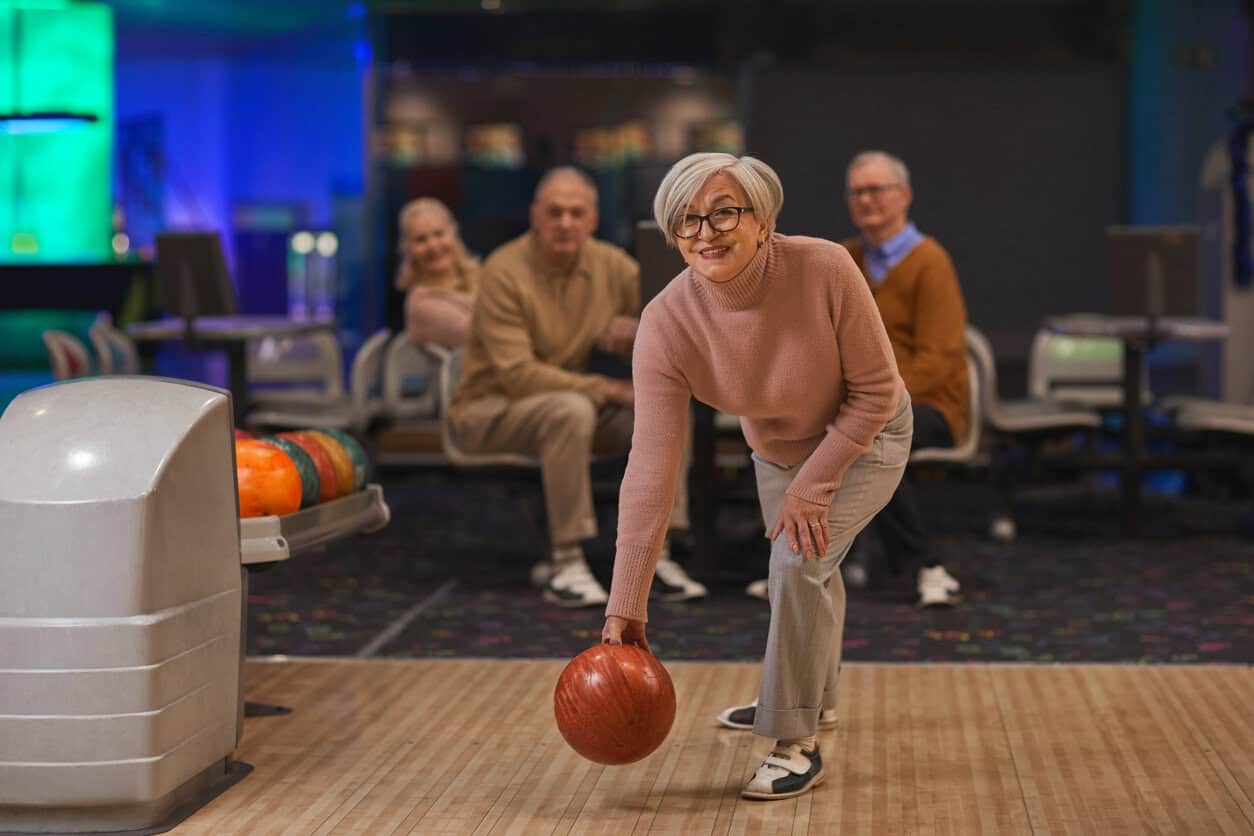
Social participation. I can’t speak to his productivity or his ambitions earlier in his life, or even how many friends he may or may not have had. But there were no activities beyond the recliner, the kitchen table, or the rocker on the front porch (unless you count hollering over to Mr Sharp next door occasionally). Papaw did not bowl.
So, I think, that the consequence of retirement and the lack of social connection can sometimes create that risk if we are not intentional about replacing what work was quietly providing all along.
Because Work Was Never Just Work
For many adults, a work-fueled life is full of colleagues, routines, conversations, shared goals, social interaction, structure, familiarity, and regular contact with people outside their own front door. Most of us never really notice how much social architecture work is carrying until retirement removes it.
And if retirement suddenly feels quieter, smaller, or more socially isolated than expected, it’s probably not your imagination.
Sociologist Robert Putnam explored something remarkably similar in his book Bowling Alone, which examined the long-term decline of civic engagement, community involvement, social participation, and connectedness in modern life. His argument was not really about bowling leagues specifically. Bowling simply became the metaphor.
People were still bowling.
They just were not bowling together anymore.
Putnam believed modern life had already been drifting toward isolation long before retirement ever entered the picture. Longer commutes. Television. Busier schedules. Suburbanization. Technology. Individualism. Less community involvement. Fewer shared spaces. Fewer organizations. Less face-to-face interaction.
In other words, society itself was already becoming more disconnected.
And his book didn’t connect any of it to retirement. This is just me noticing and connecting things.
Retirement can simply amplify that reality more clearly.
This may explain why so many retirees quietly drift toward isolation without fully recognising that it’s happening.
The risky part is how insidious this kind of withdrawal can be.
The withdrawal itself just feels like stepping back for a bit. Catching your breath. It feels comfortable.
That may actually be the biggest part of the problem.
There’s a German word, zugunruhe, used to describe the migratory restlessness birds experience before seasonal movement begins. Biologists sometimes describe it as a kind of instinctive agitation — a behavioral unease that appears before migration itself fully starts.
And honestly, I sometimes wonder if humans experience something psychologically similar approaching retirement.
Not necessarily a desire to disappear from life, but a quieter, harder-to-name restlessness. A growing sense that one phase of life is ending before the next one has fully taken shape.
The problem is that, unlike migrating birds, humans can misinterpret that restlessness completely.
Instead of moving toward new forms of participation, connection, and engagement, it can become very easy to retreat into comfort, isolation, routine, and withdrawal instead.
Especially when nobody is expecting you anywhere anymore.
I see it in myself, too. And I had the life lesson right there in front of me. And yet here I am, by myself.
I happily live a semi-hippie lifestyle, alone half the year, in Costa Rica. No bra. Occasionally going commando in shorts. Barefoot half the time. Entire days are organised around coffee, birds, writing, weather, and whether or not I feel like becoming a functional member of society before noon.
Honestly? It’s Fabulous, But Not Totally Helpful
But I also see how easy it is to unintentionally self-isolate when nobody is expecting you anywhere anymore.
After I retired, one of the things that struck me most noticeably was not the actual isolation itself.
It was how drastically the laughter in my daily life decreased.
I had fabulous colleagues. Despite the seriousness of all my jobs, we laughed constantly. ICU nursing, emergency medicine, the fire service — all of them came with stress, responsibility, pressure, and dark humour that somehow kept human beings emotionally afloat inside difficult environments.
We laughed our asses off all day.
And retirement, strangely enough, can become very quiet after a lifetime of that kind of shared experience.
That observation, the loss of social connection, may matter more than we realise. Connection beats isolation when it comes to adding longevity to a healthy life. Isn’t that what we all want out of post-retirement? A longer, healthier life…and no bra?
Researchers from Harvard T.H. Chan School of Public Health note that strong social connections are consistently associated with healthier ageing, longer lifespan, improved emotional well-being, lower stress, and even reduced risk of chronic disease. Similarly, researchers from the University of Florida Department of Physiology and Aging describe social connection as one of the major predictors of healthy ageing and overall quality of life.
In other words, Putnam’s observations about social participation were not merely philosophical or nostalgic.
Human beings genuinely appear to function better when they remain connected, engaged, involved, and embedded in meaningful social relationships.
Which Brings Us Back to Retirement And Social Connection
Putnam’s proposed solution to social decline was surprisingly straightforward:
Join something.
Not because retirees need to become aggressively social or over-scheduled. And not because every retiree suddenly needs a pickleball addiction and matching visor collection.
But because social engagement itself matters!
Golf leagues.
Volunteer organizations.
Book clubs.
Travel groups.
Community theatre.
Fitness classes.
Painting workshops.
Photography clubs.
Coffee groups.
Fishing buddies.
Learning communities.
Church groups.
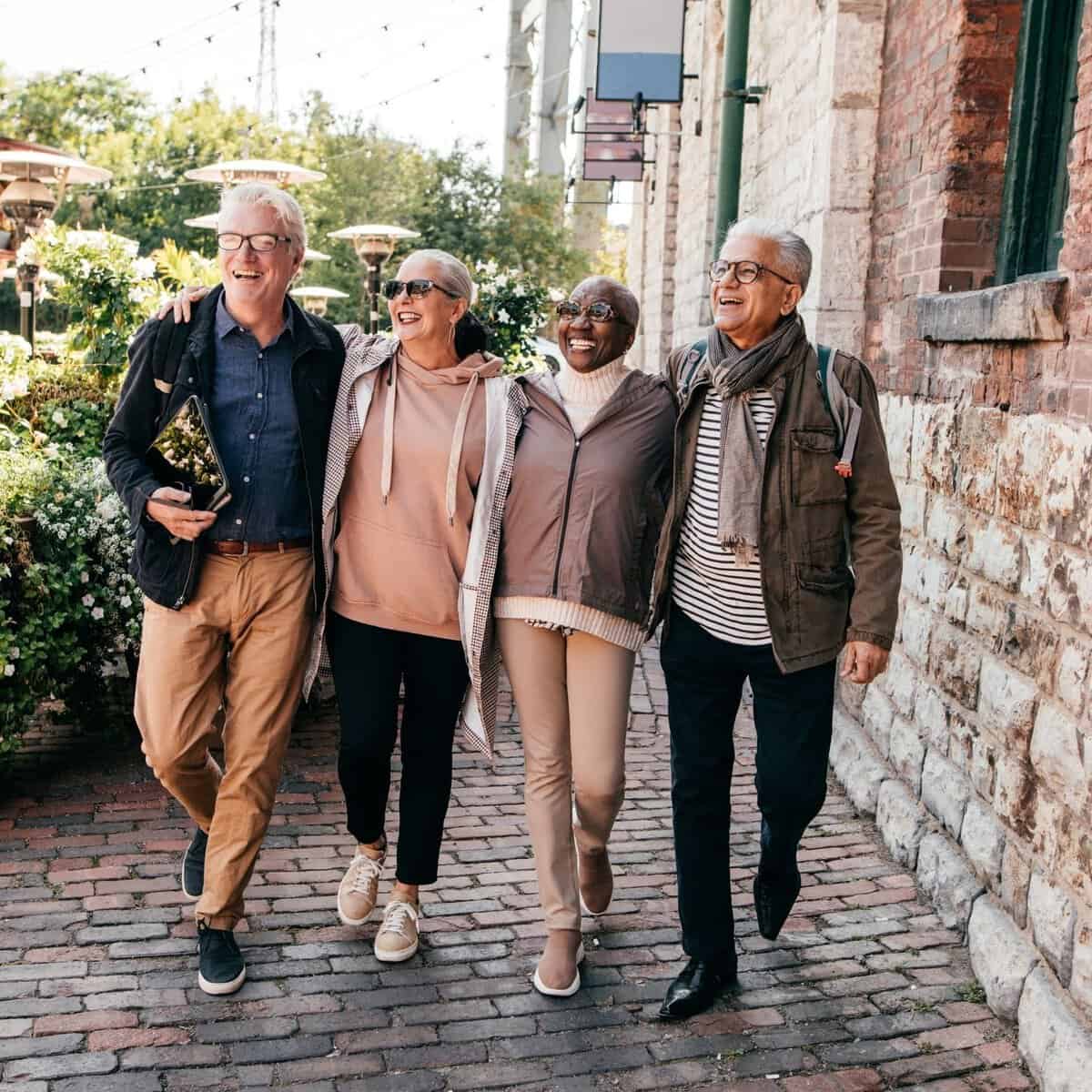
Anything, really, that gets people back into regular contact with other human beings and the outside world.
The activity itself is often secondary. What matters is continued participation in life. Because eventually, the real danger may not be slowing down.
It may be disappearing gradually into isolation while convincing yourself you’re simply “taking it easy.”
My Papaw probably thought he had earned the right to rest.
And honestly, he had.
But I also think he deserved a retirement that kept him laughing, connected, curious, and participating in life a little longer, too.
You May Also Enjoy
To Telic or Not to Telic: Why Retirement Feels Psychologically Strange
Why achievement, structure, and goal-oriented living can leave retirement feeling emotionally unfamiliar.
https://imthinkingofretiring.com/retirement-purpose-and-meaning/
Are You Reinventing Your Life After Retirement — Or For Retirement?
Why participation, curiosity, and continued engagement matter more than many traditional retirement narratives suggest.
https://imthinkingofretiring.com/reinventing-your-life-after-retirement/
🔗 References
This article is informed by research and writing related to social connection, healthy ageing, community participation, and retirement transition, including:
Putnam, R. D. (2000). Bowling Alone: The Collapse and Revival of American Community. Simon & Schuster.
https://www.simonandschuster.com/books/Bowling-Alone/Robert-D-Putnam/9780743203043
Harvard T.H. Chan School of Public Health. The Importance of Connections: Ways to Live a Longer, Healthier Life.
https://hsph.harvard.edu/news/the-importance-of-connections-ways-to-live-a-longer-healthier-life/
University of Florida Department of Physiology and Aging. How Social Connections Increase Longevity and Healthy Ageing.
https://distance.physiology.med.ufl.edu/about/articles/how-social-connections-increase-longevity-and-healthy-aging/

Cynthia Ross Tustin is the founder of I'm Thinking of Retiring, an online publication exploring the psychology, purpose, and everyday realities of life after work. A retired Fire Chief, former ICU and Emergency Room nurse, instructor, and policy writer, she combines lived experience, research, and a lifelong curiosity about human behaviour to write thoughtful essays on retirement, identity, purpose, friendship, and the ordinary moments that quietly reveal something larger. Through her Retirement Field Notes and Ordinary Tuesday series, she encourages readers to approach this next chapter with curiosity rather than certainty.